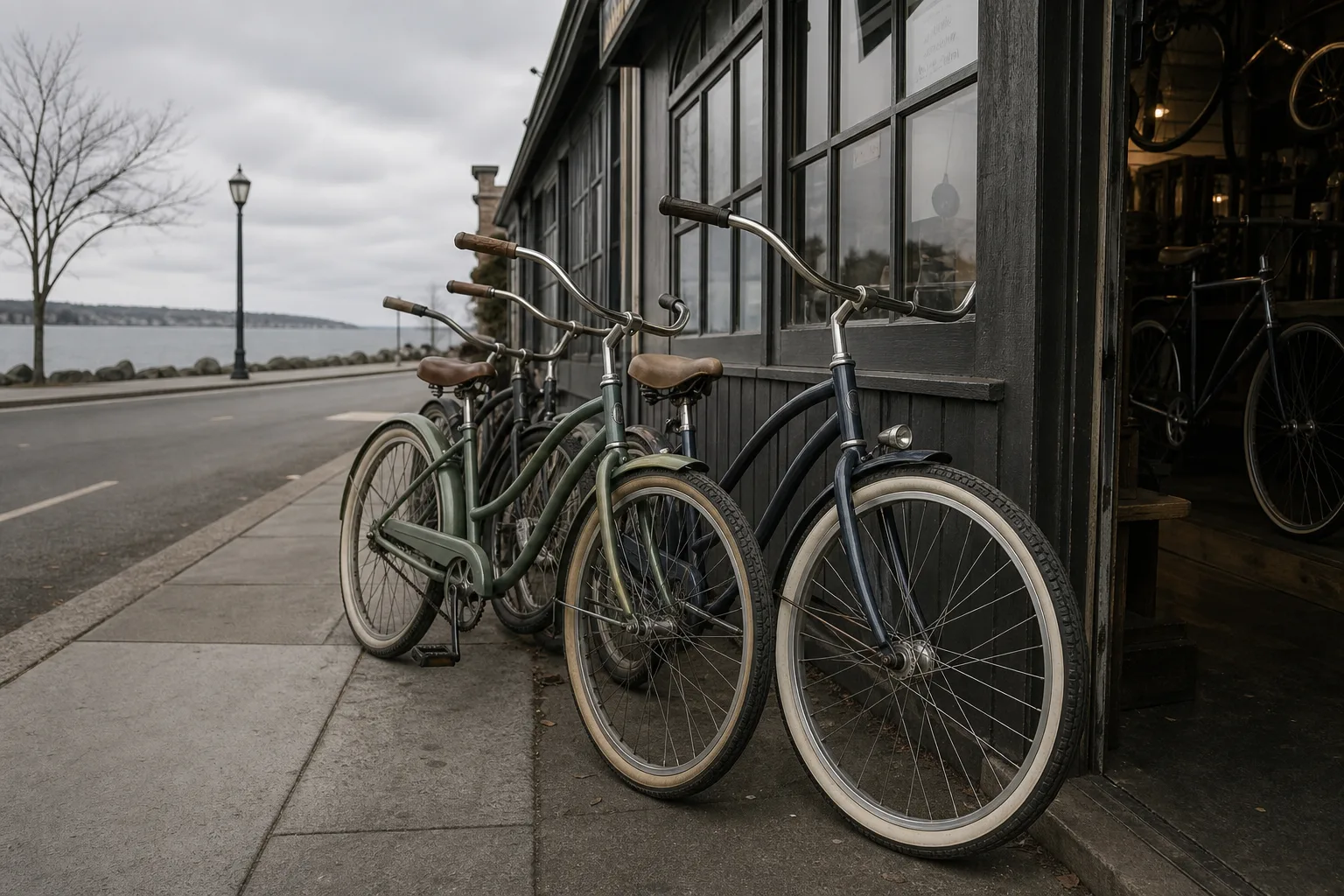
A single-speed upright bike is excellent inside a narrow set of conditions, and the real cost of getting the decision wrong is mostly freight, fees, and time.
A single-speed upright bicycle is a specialized tool that does not look like one. The wide saddle, the swept-back handlebar, and the long wheelbase all read as generic comfort, which is why people buy one expecting it to cover every errand they might ever run, and then discover that it covers a specific set of them extremely well and the rest poorly. The specific set is short, flat, and paved. Understanding the edges of that set before the box arrives is the difference between a bike that gets ridden four times a week and one that becomes a return shipment.
The conditions it was built for
Upright geometry puts your hips under your shoulders and your hands roughly at chest height, which takes weight off your wrists, opens your field of view, and lets you look over parked cars instead of through them. On flat pavement at nine or ten miles an hour, that posture costs you almost nothing in efficiency, because wind resistance is not yet the dominant force at those speeds. One gear is enough when the terrain never asks for a different one. The whole package is quiet, mechanically simple, and forgiving of neglect in a way that a bike with a derailleur, a cable, and eight cogs is not.
Three miles is a useful boundary, not a hard one. Inside three miles on flat ground, a single-speed upright is faster door to door than a car in most towns, because parking is free and instant, and it is more pleasant than walking. The trips that fit are the grocery run, the school drop-off, the library, the beach access road, the office two neighborhoods over. Shops that sell Beach Cruisers tend to describe exactly this radius when you ask them what the bike is for, and the description is accurate.
Where it runs out
Three things end the party, and they end it in a predictable order. Hills come first. A single gear on a heavy steel frame with an upright rider is geared for flat cruising, so a grade that a road cyclist would not name becomes a standing effort or a walk. A gentle overpass is fine once and tiresome daily. Sustained cargo comes second, because a rear rack on a cruiser handles a bag of groceries but not a full week of them, and weight over the back wheel on a long-wheelbase frame makes the steering feel vague. Distance comes third, since a saddle sized for comfort at twenty minutes becomes a pressure problem at ninety.
None of this is a defect. It is the same trade that makes the bike good at what it is good at: mass and stability and simplicity, bought by giving up range and climbing. The Consumer Product Safety Commission is responsible for the federal requirements that govern how bicycles sold in the United States are built and equipped, and those rules cover braking and assembly rather than fitness for a particular route. Deciding whether the route suits the bike stays with you, and the honest way to do it is to drive or walk the trips you actually intend to make and count the grades.
What getting it wrong actually costs
The purchase price is the part people study, and it is the part that matters least to the downside. A cruiser bought online arrives partly assembled, and the first real expense is usually a shop tune-up to true the wheels, set the brake, and torque the stem and crank, which is money well spent whether you keep the bike or not. Then come the parts that make it usable: a rack, a basket, a lock rated for where you live, lights, and often a different saddle. Those additions frequently total a meaningful fraction of the bike itself, and almost none of them come back to you on resale.
Returning a bicycle is where the arithmetic turns. A boxed bike is oversized freight, so return shipping is not the flat rate you pay for shoes, and some sellers deduct a restocking fee on top. If the bike has been assembled and ridden, the return window may already be closed, which pushes you toward the secondhand market, where used cruisers sell slowly and at a steep discount because the buyer pool is local and small. The realistic cost of a mismatch is therefore not the sticker price. It is the accessories, the assembly, the freight, and the gap between what you paid and what a stranger will pay in the spring.
Who keeps the bike and who sends it back
The people who stay happy tend to share a profile: flat neighborhood, paved or hard-packed routes, trips measured in blocks rather than miles, a place to park the bike indoors or under cover, and no expectation that it will replace a car for anything bulky. They ride in ordinary clothes, they ride slowly, and they value not thinking about the machine. The people who send it back usually wanted one bike for two jobs, the errand loop and the weekend twenty-miler, and a single-speed cruiser will only ever do the first one well.
There is a clean way to test yourself before spending. Map the five trips you make most often, note the steepest grade on each, and note the heaviest load. If the grades are mild and the loads fit a rack and a basket, the decision is easy and cheap. If two of the five involve a real climb, a three-speed internally geared hub solves it for a modest premium, and buying that version up front costs far less than discovering the need after the return window closes.